
Can You Learn to Spin Wool at a Workshop?
Updated: 3 days ago
Last Updated: November 12, 2026
Quick Summary
Yes, you can learn to spin wool at workshops, and most beginners leave their first class with real yarn in hand. A single workshop teaches the full path from loose fiber to finished singles, and you will spin wool on your own before the session ends.
A good beginner session covers terminology, fiber preparation, drafting, making singles, and plying.
Drop spindle spinning is the cheapest and most forgiving way to start, teaching twist control better than a wheel.
Wool preparation is the step beginners skip, and it is why some yarn feels lumpy.
Beginners often treadle too fast on a wheel; slow, steady feet beat fast, jerky ones.
Ask three questions before booking: what will I make, how big is the class, and what is included?
Ready to spin your first yarn?
Hands-on fiber arts workshops, boutique lodging, and a working wool mill in a restored 1916 schoolhouse.
Table of Contents
What You Actually Learn in a Beginner Spinning Workshop
You can absolutely learn to spin wool at workshops, and most beginners leave their first class with real yarn in hand. The short answer: a single workshop teaches you the full path from loose fiber to finished singles, and you will spin wool on your own before the session ends.
Here is what most guides get wrong: they treat spinning as a mystery you unlock over months. In practice, the basic motion clicks faster than people expect. The hard part is consistency, and that comes with practice after class.
The Core Skills Covered in Most First Classes
A good beginner session covers five things:
Spinning terminology so the instructor's words make sense
Fiber preparation and how to recognize good fleece
Drafting fiber into an even stream
Making singles on a spindle or wheel
Plying two strands into a balanced yarn
You will also learn to spot the difference between overspun and underspun yarn. That skill matters more than speed.
Spinning Classes for Beginners: What to Expect on the Day
You arrive, meet a small group, and sit down at a worktable with fiber in front of you.
A typical day looks like this:
Bring a notebook. You will hear terms like "drafting triangle" and "take-up" and want to write them down.
Drop Spindle Spinning for Beginners: Your First Tool
Drop spindle spinning for beginners is the cheapest and most forgiving way to start. A spindle costs little, weighs almost nothing, and teaches twist control better than a wheel does.
The spindle hangs from your fiber supply and spins as it drops. Your fingers pinch and release fiber to let twist travel upward. That pinch-and-release rhythm is the whole craft in miniature.

A common mistake is holding the fiber too tight. If your yarn keeps breaking, loosen your grip. If it never takes twist, pinch closer to the spindle.
Watch out: spinning the spindle in the wrong direction makes yarn that unravels when you ply it. Check the spin direction before you start.
Wool Preparation for Spinning: From Fleece to Draftable Fiber
Wool preparation for spinning is the step beginners skip, and it is the reason some yarn feels lumpy. Raw fleece needs cleaning, opening, and separating before it drafts smoothly.
Fiber prep takes several forms:
Carding with hand cards to open and align fibers
Combing for smoother, longer-staple yarn
Fiber blending to mix colors or fiber types
Pre-drafting to loosen a dense roving before spinning
You do not need to process a whole fleece to start. Our Select Breeds Wool Blend Roving for Spinning is processed light and airy so it drafts easily for new spinners.
If you plan to buy raw fiber, The Field Guide To Fleece Book lists over 100 breeds and describes each one's characteristics. It saves a lot of guesswork at a fiber festival.
For a deeper walkthrough, our article on wool carding techniques step by step covers hand cards in detail.
Inside a Spinning Wheel Workshop: What Changes With a Wheel
A spinning wheel workshop adds speed and foot coordination to the skills you already know. The wheel does the twisting for you, so your hands focus on drafting.
Wheel basics come first: the treadle, the drive band, the flyer, and the tension knob. Scotch tension lets you adjust how hard the wheel pulls fiber from your hands.
Beginners often treadle too fast. Slow, steady feet beat fast, jerky ones every time. Sit tall, keep your elbows relaxed, and let the wheel feed the yarn.
If you want to see the kind of wheel many new spinners start on, look at the Ashford Kiwi 3 Spinning Wheel Natural. It assembles quickly and adjusts for beginners.
Wheel or Drop Spindle? How to Choose Before You Book
Most workshop listings mention both tools but rarely explain how the choice changes what your first class feels like. That decision is worth making before you book, because it shapes how much of the session you spend learning versus troubleshooting.
A drop spindle is a weighted shaft with a hook or notch. You set it spinning, and gravity plus the spindle's weight supplies the twist while your fingers draft fiber. A spinning wheel does the same job with a treadle-driven flyer and bobbin, so your feet supply the power and your hands are free to draft continuously.
The trade-offs that actually matter for a beginner:
Factor | Drop Spindle | Spinning Wheel |
What your body learns first | Pinch-and-release twist control | Foot timing plus hand drafting |
Typical first-session output | A short mini skein | A bobbin of singles, if treadling clicks |
Portability | Fits in a tote; spin anywhere | Stays put; needs floor space and a chair |
Setup and maintenance | Almost none | Drive band, tension, oiling, bobbin changes |
Failure mode for beginners | Over-pinching, yarn breaks | Treadling too fast, yarn overtwists or runs away |
Where it shines later | Sampling, travel, color experiments | Volume spinning, consistent gauge, long projects |
A common pattern is that spindles teach twist control faster because you feel the twist enter the fiber directly under your fingers. Wheels teach production speed, but only after treadling becomes automatic. Many instructors start beginners on a spindle for the first hour specifically so the wheel has less to compete with.
Watch out: booking a wheel-only class as your very first session can mean spending most of the time learning to treadle evenly rather than learning to draft. If the listing does not say which tool you will use, ask before you pay.
If you are torn, look for a workshop that lets you try both in the same session. Twenty minutes on each tool will tell you more about your own hands than any comparison chart.
Choosing a Workshop That Fits How You Learn
Pick a workshop by matching its format to your goals, not by picking the closest one. Ask three questions before you book: what will I make, how big is the class, and what is included?
Use this checklist:
Does the class cover drafting and plying, or only wheel basics?
Is the class size small enough for hands-on correction?
Are tools and fiber provided, or do I bring my own?
Is the session aimed at true beginners?
Can I keep the yarn I make?
Does the venue offer lodging if I am traveling?
What to Bring and How to Prepare
Most first-timer questions are practical, and a little preparation makes the day smoother:
Clothing: wear close-fitting sleeves and avoid loose cuffs or scarves near a wheel's moving parts. Layers help because drafting rooms run warm once everyone is working.
Footwear: flat, closed-toe shoes are easier on a treadle than sandals or heels.
Hands: keep nails short and skip hand lotion right before class, lotion makes fiber slick and harder to grip.
Notebook and pen: you will hear terms like drafting triangle, take-up, and Scotch tension and want them written down.
Your own fiber (optional): ask first. Many classes supply fiber, and bringing a fleece you have not prepared can slow the group down.
A bag for your yarn: you will leave with a mini skein and possibly a bobbin's worth of singles.
Ask what materials are included and what costs extra. Fiber, hand cards, and wheel rental are sometimes bundled and sometimes separate, so confirm before you commit. Lodging and meals are often separate at destination workshops.
Accessibility and Adaptations
Spinning is a seated, repetitive hand craft, and good programs adapt. Ask about:
Seating: chair height and back support matter for treadling; a cushion or adjustable stool can help.
Table height: drafting is easier when your fiber supply rests at a comfortable height, not on your lap.
Hand mobility: some learners do better with a heavier spindle, a supported distaff, or a wheel with lighter treadle tension. Ask whether the instructor can demonstrate alternative grips.
Sensory needs: wool dust and machine noise bother some people; ask about ventilation and quiet spaces.
Breaks: hand fatigue is real. A class that builds in rest breaks is usually better for beginners than one that runs straight through.
Watch out: a class that promises "customized yarn and color techniques" in a two-hour slot is likely rushing the fundamentals. Learn to make plain, even singles first.
Finally, ask what happens after class. A program that offers a follow-up session, open studio time, or a troubleshooting contact gives you somewhere to take the problems that always show up in the first month of practicing alone.
Book a Fiber Arts Workshop at Nome Schoolhouse
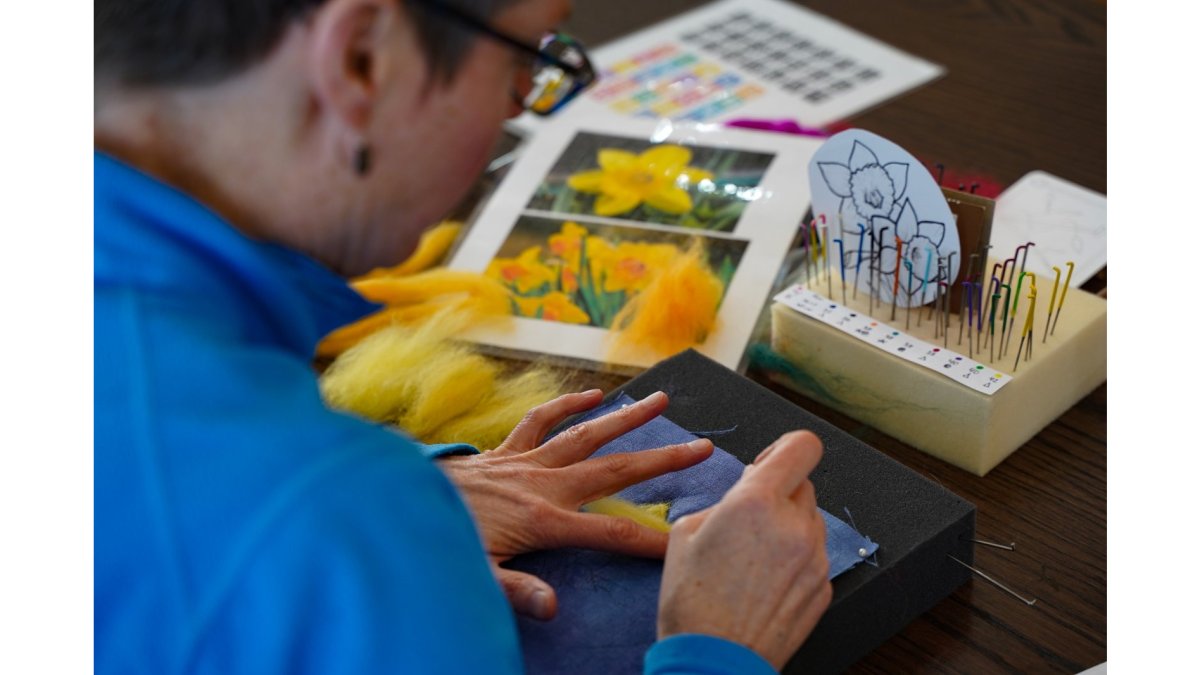
Our restored 1916 schoolhouse pairs hands-on fiber arts education with boutique lodging and a working fiber processing mill on site. You can meet fiber-producing animals, then sit down and spin wool from fiber you just handled. Traveling in for a class? Our hotel rooms let you stay steps from the studio, and our catering keeps everyone fed through a full day of drafting. If spinning leaves you eager to try another fiber craft, our needle felting sessions make a natural next step.
Planning a full trip? Our guide to planning an immersive craft workshop weekend walks through the details step by step.
Ready to turn fleece into your first skein? Book a workshop at Nome Schoolhouse and spend a weekend learning to spin, felt, and weave in a building with a story. Our fiber arts workshops, on-site mill, and hotel rooms make it easy to stay, learn, and keep practicing. Get started with Nome Schoolhouse and leave with yarn you made yourself.
Frequently Asked Questions
Do I need to bring my own spinning wheel to a workshop?
Ask the organizer when you book whether wheels are provided and how many students share each one, since a low student-to-wheel ratio means more hands-on time. If you already own a wheel, tell the instructor in advance so they can help you troubleshoot its settings during class. Bringing your own spindle is always welcome and gives you something familiar to practice on between sessions.
Can beginners learn to spin wool with a drop spindle?
Yes. The drop spindle is the traditional first tool and remains the most affordable way to learn to spin wool. It teaches you to draft fiber and control twist without the coordination a wheel demands, and you can practice anywhere. Most beginners produce a usable, if uneven, yarn within a few hours of guided instruction. Expect your first skein to be thick and lumpy; that is normal and improves quickly with short daily practice sessions at home.
How long does it take to learn to spin yarn?
You can learn the basic motions of drafting and adding twist in a single workshop session. Producing consistent, even yarn takes longer, usually several weeks of regular practice after class. The skills that improve fastest are fiber preparation, drafting control, and plying. Plan on short practice sessions of 15 to 20 minutes rather than long marathons, and keep your first skeins so you can see your progress. Many spinners notice clear improvement by their third or fourth skein.
What should I look for when choosing a spinning workshop?
Check class size, whether equipment is provided, and how much one-on-one attention the instructor gives. A short checklist helps: confirm the student-to-instructor ratio, ask what fiber is included, find out whether you leave with finished yarn, and check if there is follow-up support or practice guidance. Also confirm the workshop matches your goal, whether that is wheel spinning, drop spindle spinning for beginners, or wool preparation for spinning. Ask about accessibility needs and cancellation policies before you book.
Comments