
How to Use Needle Felting for Relaxation and Calm
Updated: 6 days ago
Last Updated: November 10, 2026
Quick Summary
Needle felting is a craft where you shape loose wool into solid figures using a special barbed needle. Many people choose needle felting for relaxation because the work is slow, quiet, and deeply physical, and the repetitive poking motion helps you slip into a calm flow state.
A first felted ball takes about 30 minutes and needs only a foam pad, one needle, and wool roving.
Start with a tuft about the size of a cotton ball, since you can add fiber but cannot easily remove it.
Never poke toward your hand or lap, and always work into a foam or wool pad at least one inch thick.
Take a five-minute break every 15 minutes to keep your grip loose and avoid hand fatigue.
Try a 20-minute timer and one small shape for a low-pressure weekly routine.
Ready to try needle felting in person?
Join a hands-on workshop at our historic schoolhouse and felt your first piece with real wool.
Table of Contents
Why Needle Felting for Relaxation Works
Needle felting is a craft where you shape loose wool into solid figures using a special barbed needle. Many people choose needle felting for relaxation because the work is slow, quiet, and deeply physical.
The appeal is simple. You hold soft wool in one hand and a needle in the other. You poke. The wool tightens. Your shoulders drop.
Below, we explain why this craft calms the mind, how to start safely, and what to expect from your first session.
The Tactile Pull of Wool in Your Hands
Wool is the heart of this craft. You work with wool roving, which is loose, unspun fiber. It feels airy and soft in your palm. It smells faintly of lanolin.
The tactile experience matters more than most beginners expect. Your fingers learn the texture fast. You feel the fiber mat down with each poke. The soft textures give your hands something real to focus on.
This is why needle felting pulls people away from screens. You cannot scroll while you hold a felting needle. Your hands are busy. Your mind follows.
You can see the exact roving we use in our Nome Schoolhouse Corriedale Needle Felting Wool Roving if you want to feel it for yourself.
Repetitive Motion, Focus, and the Flow State
The repetitive motion of poking wool is where the calm deepens. Each stab is small and steady. Your focus narrows to one spot of fiber.
This is how people slip into a flow state, sometimes called being in the zone. The task is simple enough to master but engaging enough to hold your concentration. Time gets quiet. The room fades.
The barbed needle does the work. Tiny barbs catch the fibers and tangle them together. You do not need glue or thread. Just wool, a needle, and patience.
That steady rhythm is the same reason many people find knitting or whittling calming. The body settles. The mind follows. Many crafters describe it as a form of moving meditation.
How to Needle Felt for Beginners: Your First Calm Session
Here is a simple first project you can finish in one sitting. You will make a small felted ball. It teaches the core motion without pressure.
Total time: about 30 minutes. Difficulty: beginner.
What you need:
A foam work surface
One felting needle
A small handful of wool roving
Step 1: Set up your space. Place the foam or wool pad on a table in front of you. Sit with your elbows relaxed.
Step 2: Pull a small tuft of wool. Keep it loose. Do not roll it tight.
Step 3: Poke straight down. Push the needle into the wool and back out. Keep the needle vertical.
Step 4: Turn and repeat. Rotate the wool every few pokes. This keeps the shape even.
Step 5: Firm it up. Keep poking until the ball holds its shape and feels dense.

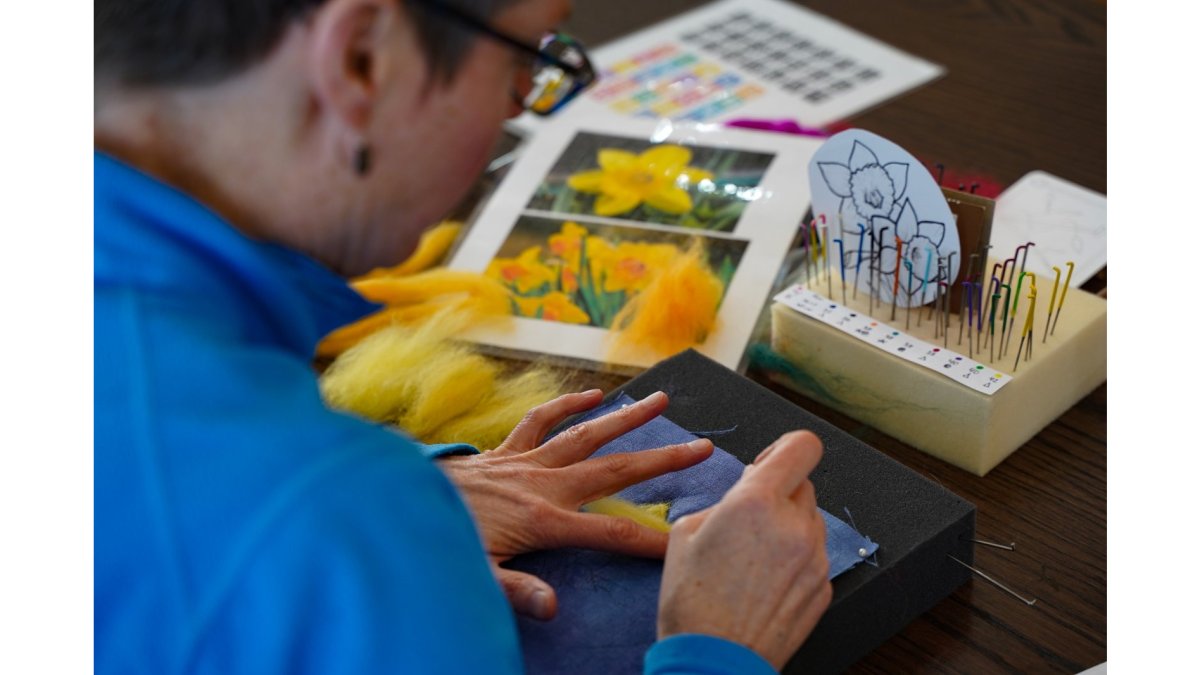
A woman uses a felting needle to create a wool ball.
Expected result: a firm, fuzzy ball about the size of a walnut. That is your first needle-felted sculpture. Simple, and yours.
Here is the first project at a glance, so you know exactly what you are committing to.
Step | What to do |
Set up | Place foam or wool pad on table, elbows relaxed |
Pull wool | Small loose tuft, do not roll tight |
Poke | Push needle straight down, keep vertical |
Turn | Rotate wool every few pokes for even shape |
Firm | Keep poking until ball holds shape and feels dense |
Needle Felting Tips for a Stress-Free Start
A few small habits make the first sessions far calmer. These needle felting tips address the two things that most often turn a relaxing session into a tense one: too much wool and too much speed.
Start with less wool than you think. A tuft about the size of a cotton ball is plenty for a first shape. You can always add fiber. You cannot easily remove it, and overstuffed work takes longer to firm up and feels harder to control.
Poke slowly at first. Speed does not make the wool bind faster. The barbs catch fibers on contact, so a slow, deliberate poke tangles just as much wool as a fast one, but it leaves you in control of where the needle lands.
Keep your work close to the pad. Lifting the wool into the air wastes motion and strains your wrist. Rest your holding hand on the pad and turn the wool with your fingertips rather than lifting it up to inspect it.
Take breaks every 15 minutes. Stand up. Roll your shoulders. Open and close your hands a few times. The craft rewards patience, not endurance, and a five-minute break every quarter hour keeps your grip loose for the next stretch.
Needle Safety and Avoiding Hand Fatigue
The first rule of needle safety is simple: never poke toward your hand or lap. Always poke into the pad, and keep your holding hand behind or beside the work, never underneath it.
A foam pad is not optional. Poking on a hard table is the fastest way to snap a needle and jab your fingers, because the needle has nowhere to go once it passes through the wool.
Hand fatigue is the other common issue. Hand fatigue is a cue to pause, loosen your grip, and let the slow rhythm of making become a way to settle your emotions, a practice explored through Pure Art Moments.
Keep the wrist straight and let the motion come from the elbow, and the strain spreads across larger muscles.
Watch out: poking with the needle angled toward your body instead of straight down is the most common cause of hand injuries in this craft. Check your angle every few minutes, especially once you start to relax and your form drifts.
A proper work surface helps both problems. Our foam needle felting cushions give you a firm base so you can poke straight down without chasing the wool around the table, and they absorb the needle tip so you can work with a lighter grip.
What to Look for in a Needle Felting Kit
A good needle felting kit removes the guesswork. It should include the right needle, enough wool, and a work surface.
Look for these things before you buy:
Real wool roving, not synthetic fiber
A foam pad sized for your project
Spare needles, since they do break
Clear printed instructions with photos
A project that fits your skill level
Skip kits with vague instructions or mystery fiber. Cheap roving falls apart as you work, which turns a calm session into a frustrating one.
If you want a complete, beginner-friendly option, our Heartfelt Penguin Needle Felting Kit includes everything for a first project. It suits a quiet weekend or a gift for a crafty friend.
Realistic Expectations: Who Finds Needle Felting Relaxing
Most people find needle felting calming, but not everyone, and the difference usually comes down to temperament rather than talent. It helps to know what you are signing up for before you buy your first kit.
The craft suits people who enjoy quiet, hands-on work. It rewards patience and small, steady effort. If you like slow progress you can see and touch, this fits.
It may not suit you if you want fast results. The first project looks lumpy. That is normal, and it is not a sign you are doing it wrong.
Some people find the poking motion tiring at first. Others dislike the sharp needles or the dry, faintly scratchy feel of raw wool on their skin. That is honest, and it is fine.
There is also a frustration curve worth naming.
The craft also builds skill-building over time. Each project teaches your hands a little more. Creative expression grows as your control improves, and the relaxation deepens once the basic motion stops requiring conscious thought.
Do not expect a finished needle-felted sculpture on day one. Expect a calm half hour and a small, fuzzy shape.
A Short, Low-Pressure Needle Felting Routine
You do not need a long session to feel the benefit. A short, calm routine works better than a marathon.
Try this simple weekly rhythm:
Set a 20-minute timer. Stop when it rings, even if you are mid-project.
Pick one small shape. A ball, a leaf, a tiny mushroom.
Clear your table. Just the pad, the wool, and one needle.
Poke slowly for the first five minutes. Let your breathing settle.
Put everything away when you finish. A tidy space invites you back.
This low-pressure relaxing hobby fits into a busy week. It gives you self-care time without a screen.
If you want a project ready to slot into that routine, our Woodland Gnome Needle Felting Kit makes a cozy weekend session. It is also a warm gift for a friend who needs a slower hobby.
For readers who want to keep growing after their first session, our guide to needle felting supplies for professional results that last covers tools and materials in more depth.
Book a Needle Felting Workshop at Nome Schoolhouse
At Nome Schoolhouse, guests can enjoy fiber arts workshops inside our restored 1916 schoolhouse.
Our building is a boutique hotel and event center with a fiber arts focus. Guests can connect with fiber-producing animals on site. The setting does half the calming for you.
You do not need any prior experience.
Ready to trade the screen for soft wool and a quiet hour? Book a room and join a workshop, then wander the grounds and meet the animals that grow the fiber.
The hardest part of any calming craft is starting. Pick one small project, set a timer, and let the first poke do the rest. Nome Schoolhouse offers signature needle felting kits, guided workshops, and a working wool mill so you can learn the craft from fiber to finish. Get started with Nome Schoolhouse and find your quiet rhythm in wool.
Frequently Asked Questions
How can needle felting help you relax?
Needle felting gives your hands a simple, repetitive task while your mind focuses on shaping wool. That combination of tactile input and steady concentration can ease stress and help you settle into the present moment. Many people describe it as a meditative craft because each poke is small and predictable. It is not a replacement for medical care, but it can be a calming part of a self-care routine.
How difficult is needle felting for beginners?
Most beginners can shape simple forms like balls, hearts, or small animals within their first session. The learning curve is gentle because you are poking wool into place rather than mastering complex stitches. Start with a basic needle felting kit that includes roving, a foam pad, and needles. Keep your first project small and expect some loose fibers at the start. Practice builds control quickly.
What supplies do you need to start needle felting?
You need wool roving, a barbed felting needle, and a foam pad to protect your work surface. A needle felting kit usually bundles these together and may add finger guards and a few colors of fiber. Choose wool that holds together well rather than roving that falls apart. Good needles and dense wool make a bigger difference than a large supply stash.
How long should a beginner needle-felt in one session?
Start with 20 to 30 minutes and stop when your hand or wrist feels tired. Needle felting uses small, repetitive motions, so short sessions help you build technique without strain. Take breaks, stretch your fingers, and keep your grip relaxed. A brief daily session often feels more relaxing than one long marathon, especially while you are learning.
Comments